Major Organelles of the Eukaryotic Origin and Their Functions
There are 12 organelles that I will show and explain to you below.
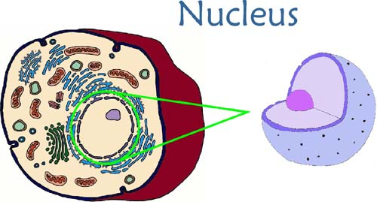 | The Nucleus: The nucleus is the part of the cell that contains the DNA of a cell. It is a rather large part of the cell and is shaped mostly like a cirlce. |
The Cell Membrane: The cell membrane is what regulates what materials go in and out of the cell. This is to make sure that nothing bad enters the cell and nothing vital leaves it. | 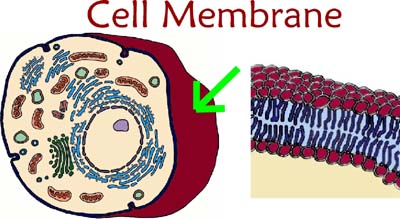 |
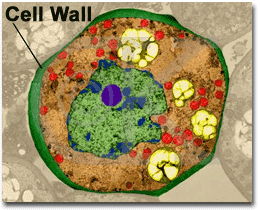 | The Cell Wall: The cell wall is what shapes, supports and protects the cell. This is part of the outer rim of the cell and helps give it its shape. |
The Mitochondria: The Mitochondria is an organelle in the cytoplasm of cells that functions in energy production. -Dictionary.com The mitochondria has an eggplant like shape to its outside and the inside is full of a maze/swirly like structure which goes through all of the mitochondria. | 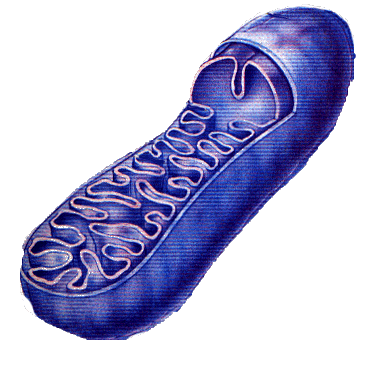 |
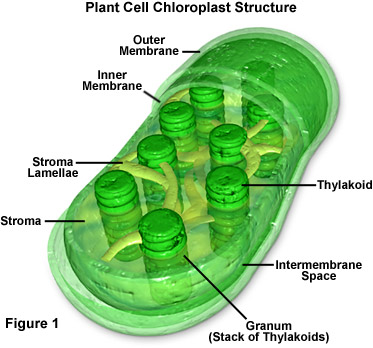 | The Chloroplast: The cloroplast is a plastid containing chlorophyll and other pigments, occurring in plants and algae that carry out photosynthesis. -Dictionary.com The chloroplast is a very complex organelle structurally. It contains many parts and components like Thylakoids, Granums, inner and outer membranes and Stroma Lamellae. |
The Ribosome: The ribosome is a tiny, somewhat mitten-shaped organelle occurring in great numbers in the cell cytoplasm either freely, in small clusters, or attached to the outer surfaces of endoplasmic reticula, and functioning as the site of protein manufacture. -Dictionary.com |  |
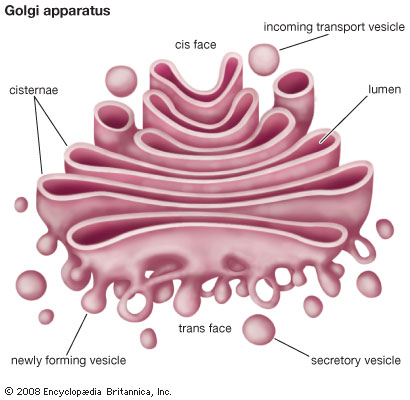 | The Golgi Apparatus: The Golgi Apparatus is an organelle, consisting of layers of flattened sacs, that takes up and processes secretory and synthetic products from the endoplasmic reticulum and then either releases the finished products into various parts of the cell cytoplasm or secretes them to the outside of the cell. -Dictionary.com |
The Endoplamic Reticulums: The Endoplasmic Retculum is a network of tubular membranes within the cytoplasm of the cell, occurring either with a smooth surface (smooth endoplasmic reticulum) or studded with ribosomes (rough endoplasmic reticulum) involved in the transport of materials. -Dictionary.com | 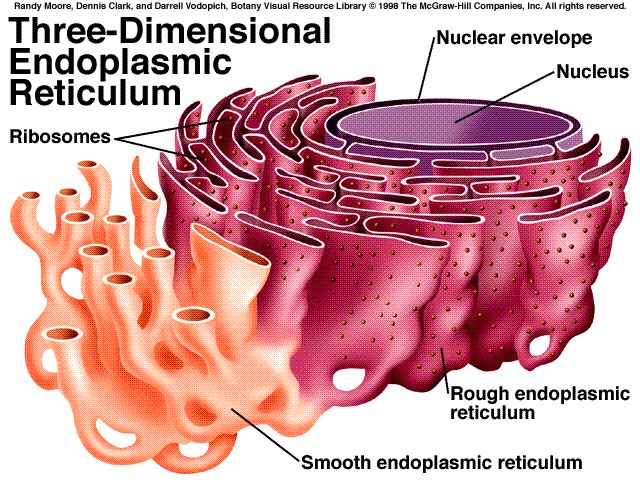 |
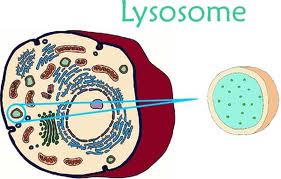 | The Lysosome: The lysosome is a cell organelle containing enzymes that digest particles and that disintigrate the cell after its death. -Dictionary.com |
Vacuole: The vacuole is a membrane bound cavity within a cell, often containing a watery liquid or secretion. Vesicle: a small bladderlike cavity, especially one filled with fluid. -Dictionary.com | 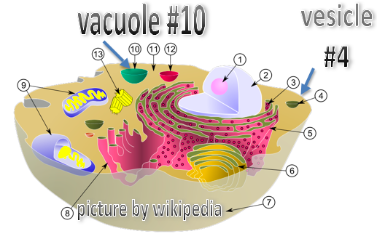 |
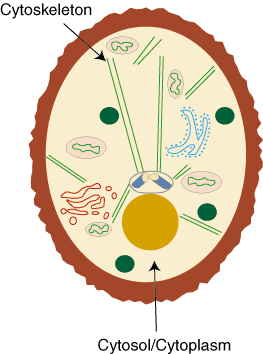 | The Cytoskeleton: The cytoskeleton is a shifting lattice arrangement of structural and contractile components distributed throughout the cell cytoplasm, composed of microtubules, microfilaments, and larger filaments, functioning as a structural support and transport mechanism. \ -Dictionary.com |
The Centrioles: The centrioles is a minute cylindrical organelle near the nucleus in animal cells, occurring in pairs and involved in the development of spindle fibers in cell division. -Google.com definitions | 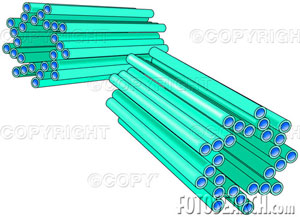 |
